Authorized Dealer
Graduated neutral density filters can be used to prevent overexposure in specific areas of an image, such as bright skies, while allowing for a normal, unaffected exposure in the other regions of the image. The soft-…
Product highlights and buying context
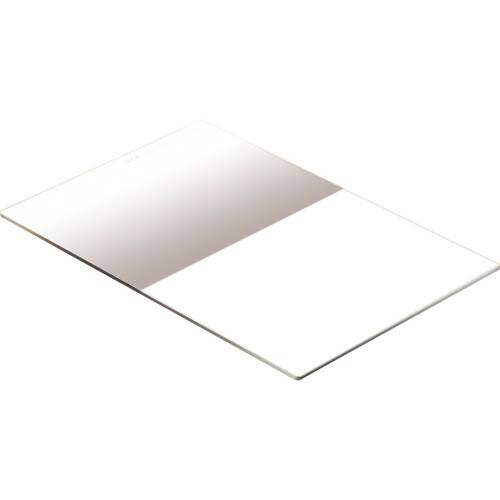
Graduated neutral density filters can be used to prevent overexposure in specific areas of an image, such as bright skies, while allowing for a normal, unaffected exposure in the other regions of the image. The soft- and hard-edge graduated neutral density filters each reduce the amount of light entering a lens by up to 3 stops. The graduated neutral density filter with a soft-edged line of transition is able to filter the sky while minimizing its effect on the land. It is particularly useful where the transition between sky and foreground is indeterminate, such as images featuring mist, fog, or the tops of trees, while the graduated neutral density filter with a hard-edged line of transition is useful for images that have defined horizon lines.
The reverse-graduated neutral density filter achieves its effect with a band of density above its center region that provides up to a 3-stop reduction in light from entering a lens. This band extends in both vertical directions and tapers to a density that provides an approximately 1-stop reduction in light at the edge above it. Directly below the 3-stop band of density, it tapers to clear, with a hard-edged line of transition before the clear area.
The placement of a 3-stop band of density with a clear area directly below allows the reverse-graduated neutral density filter to match the positioning of the sun when it is at, or immediately above, the horizon. In such instances, the sun can appear closer to the center of an image as opposed to the upper edge, and an increase in brightness is created that is more prominent on both sides of the sun than above it. This pattern of brightness corresponds to the density pattern on the reverse-graduated neutral density filter. The hard-edged line of transition in this reverse-graduated neutral density filter is useful for hard transitions between the sky and land, while the 3-stop to approximately 1-stop gradation is applicable to multiple regions of brightness within the sky.
Additional Details
Loading…
